


|
教學
Teaching


 |
|
|
| Gynecologic Oncology - 曾志仁醫師的網頁 |


Cervical cancer stages
A quick guide to what's on this page
Cervical cancer stages
The stage of a cancer tells the doctor how far it has spread. It is
important because treatment is often decided according to the stage of a
cancer. Remember - if you have had an abnormal smear and your doctor has said
you have CIN, this is not the right page for you. Cervical cancer is not the
same as an abnormal smear. The stages of cervical cancer are numbered from 0 to
4. Each stage is sometimes divided into A and B.
- Stage 0 – Your doctor may call this carcinoma in situ. It
is not an invasive cancer. It means that there are cancerous cells in the
cervix. But they have not spread away from where they started or begun to
grow into the deeper tissues of the cervix.
- Stage 1 – The cancer has started to grow into the deeper
tissues of the cervix, but has not spread any further.
- Stage 2 – The cancer has begun to spread outside the cervix
into the surrounding tissues.
- Stage 3 – The cancer has spread away from the area
surrounding the cervix. It may have grown down into the lower part of the
vagina and the muscles and ligaments that line the pelvis
(pelvic wall). And it may have grown up to block the tubes that drain the
kidneys (the ureters).
- Stage 4 - This stage is advanced cervical cancer. The
cancer has spread to other body organs outside the cervix and womb.
What staging is
Your doctor will use tests to help stage your cancer. The stage of a
cancer tells the doctor how far it has spread. It is important because
treatment is often decided according to the stage of a cancer. Doctors use
different systems to stage cancers. The system usually used for cervical cancer
simply numbers the different stages from 0 to 4. There is more about staging cancers in the about cancer section.
Remember - if you have had an
abnormal smear and your doctor has said you have CIN, this is not the
right page for you. Cervical cancer is not the same as an abnormal smear. Look
at our cervical screening section for more about what cervical smear results mean.
Carcinoma in situ (stage 0)
Stage 0 is not considered to be part of the cervical
cancer staging system because there are abnormal cells only in the surface
layer of the cervix. The cells have not spread away from where they started or
begun to grow into the deeper tissues of the cervix. So it is not an invasive
cancer. But some doctors still call it stage 0.
This stage is the same as CIN 3. The usual treatment is a cone biopsy but in some situations your doctor
may recommend a hysterectomy.
Stage 1
Stage 1 means that the cancer is just in the neck of
the womb. It is often divided into
- Stage
- Stage 1B
These days, stage
- Stage
- Stage 1B1 and stage 1B2
In stage

In stage 1B the cancerous areas are larger, but the cancer is still only in
the tissues of the cervix and has not usually spread. It can usually be
seen without a microscope, but not always. In stage 1B1 the cancer is no larger
than 4 centimetres. In stage 1B2 the cancer is larger
than

Stage 1 cervical cancer is generally treated with surgery or radiotherapy. But if you have stage 1B2 cervical
cancer, your doctor may suggest combined chemotherapy and radiotherapy.
Stage 2
In stage 2 cervical cancer, the cancer has begun to
spread outside the neck of the womb into the surrounding tissues. Stage 2 can
be divided into
- Stage
- Stage 2B
In stage
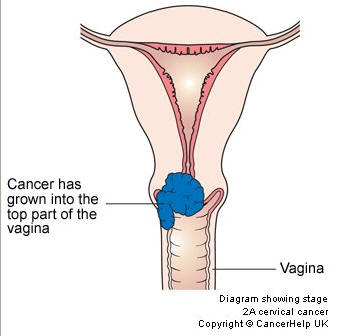
In stage 2B there is spread up into the tissues around the cervix.

Stage
Stage 2B cervical cancer is usually treated with combined radiotherapy and chemotherapy. Research studies have shown that
this combined treatment can improve the survival rates of stage 2 cervical
cancer.
Stage 3
In stage 3 cervical cancer, it has spread away from
the cervix and into surrounding structures in the pelvic area. It may have grown down into the
lower part of the vagina and the muscles and ligaments that line the pelvis
(pelvic wall). And it may have grown up to block the tubes that drain the
kidneys (the ureters). It can be divided into
- Stage
- Stage 3B
Stage
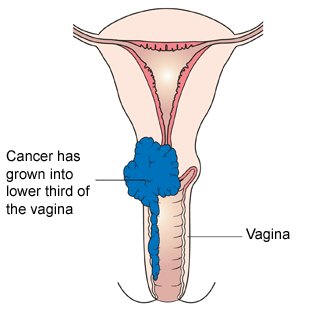
Stage 3B means the tumour has grown through to
the pelvic wall or is blocking one or both of the tubes that drain the kidneys.

This stage is usually treated with radiotherapy and chemotherapy. We know from research that this
combined treatment can improve the survival rates of stage 3 cervical cancer.
Stage 4
Stage 4 cervical cancer is advanced cancer. The
cancer has spread to other body organs outside the cervix and womb. It can be
divided into
- Stage
- Stage 4B
Stage
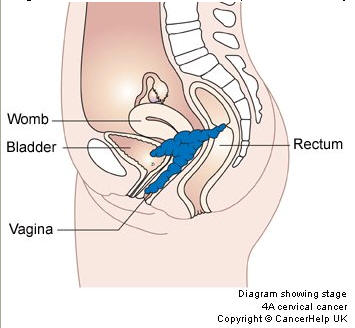
If the cancer has spread to organs further away, such as the lungs, your
doctor may call it stage 4B.

This stage of cancer may be treated with surgery, radiotherapy, chemotherapy or a combination of these
treatments. Some women may choose just to have treatment to control symptoms at
this stage.